Avoid Common Pitfalls in Secondary 1 Math Learning

Avoid Common Pitfalls in Secondary 1 Math Learning

Understanding Algebra

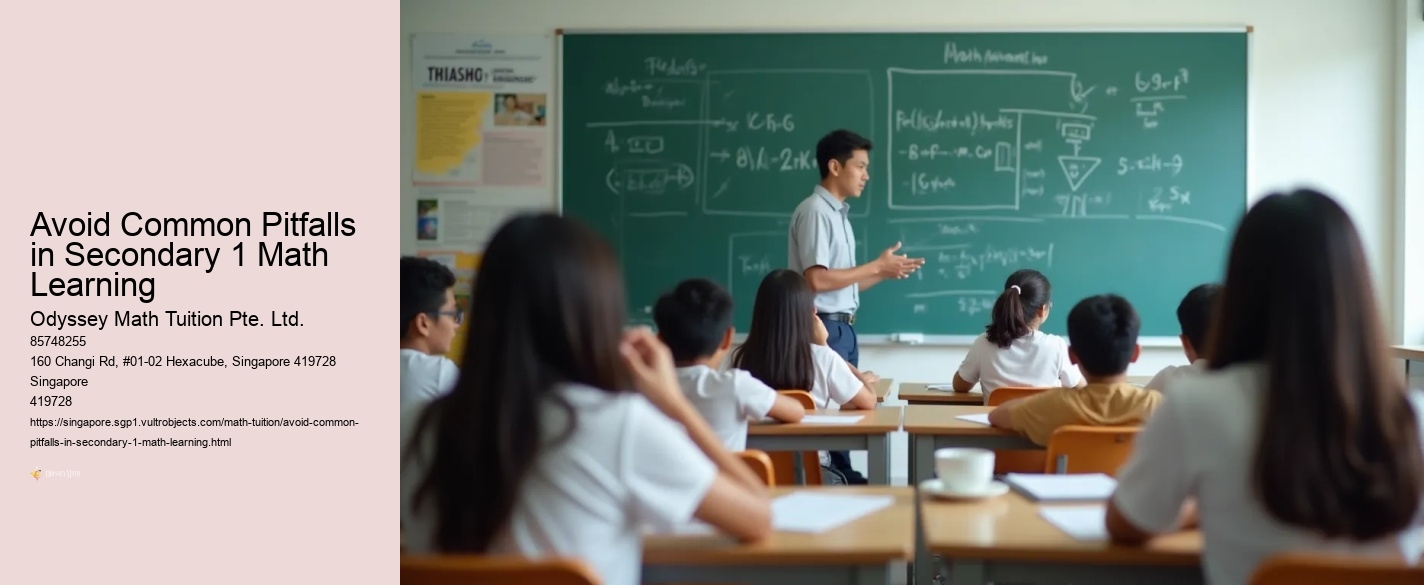
Imagine walking into a classroom where math equations come to life on a board, each number and symbol telling a story. For many Secondary 1 students in Singapore, the journey into algebra can feel like entering a foreign land. Yet, with the right tools and guidance, this seemingly complex subject can become an exciting adventure.

Unlocking the Magic of Algebra

Algebra is often seen as a mysterious language of its own. But what if we could transform these cryptic expressions into relatable puzzles? Picture algebraic expressions as recipes, where each variable is an ingredient, and your task is to create the perfect dish. By understanding how these ingredients interact, students can unravel the secrets of algebraic equations.

Secondary 1 math tuition centers in Singapore often use this approach, employing real-world analogies to make abstract concepts more tangible. This method not only aids comprehension but also fuels a student’s curiosity, encouraging them to explore further.

Interactive Learning Techniques: Bringing Math to Life

Let’s delve into the heart of interactive learning. Imagine a classroom buzzing with energy as students participate in group activities, each child contributing a piece to a larger mathematical puzzle. These sessions are not mere lessons; they are interactive experiences designed to engage and inspire.

One popular technique is the use of role-playing games, where students take on the roles of different variables in an equation. By acting out these roles, they gain a deeper understanding of how variables interact. Another method involves digital tools, like math apps and online games, which provide instant feedback and keep students motivated.

  • Board games that incorporate math challenges
  • Collaborative problem-solving sessions
  • Interactive math quizzes with real-time results

These activities transform learning from a passive to an active experience, making math not just a subject, but a thrilling challenge to conquer.

Secondary 1 Math Tuition: A Customized Pathway

In Singapore, the education system is renowned for its rigor, and secondary 1 math tuition plays a pivotal role in preparing students for success. These tuition classes are more than just additional lessons; they are tailored experiences that address individual learning needs.

Consider the tuition center as a workshop, where each student is a unique project. Tutors, like skilled artisans, identify each child's strengths and weaknesses, crafting a personalized learning plan. This bespoke approach ensures that every student can tackle algebra with confidence, armed with strategies that suit their learning style.

Moreover, tuition centers often incorporate elements of fun and competition, such as math tournaments or creative problem-solving contests, turning learning into a social and rewarding experience.

Singapore-based moms and dads raising youngsters in secondary one regularly come to understand that Secondary 1 math tuition proves indispensable for addressing foundational secondary challenges like equations in algebra and geometric principles, enabling students keep up in a demanding syllabus while fostering self-directed analytical skills..

Overcoming Challenges: The Path to Mastery

Even with the best tools and methods, challenges in learning algebra are inevitable. Yet, these hurdles are not roadblocks but stepping stones. What if we viewed mistakes as opportunities rather than failures?

In the supportive environment of secondary 1 math tuition, students are encouraged to embrace errors as part of the learning process. Tutors guide them to analyze mistakes, fostering a growth mindset. This approach builds resilience and instills a belief that every problem has a solution waiting to be discovered.

The Future of Math Learning

As we look to the future, the landscape of math education continues to evolve. With advancements in technology, the possibilities for interactive learning are boundless. Imagine virtual reality classrooms where algebraic concepts are visualized in 3D, or AI tutors that adapt in real-time to a student’s learning pace.

For parents in Singapore, the journey into secondary 1 math is not just about grades; it's about nurturing a lifelong love for learning. By embracing innovative teaching methods and supporting their children’s unique educational paths, they can ensure that algebra becomes not a challenge, but an opportunity for growth.

So, as your child embarks on this mathematical adventure, remember that with the right tools and mindset, the world of algebra is not a labyrinth, but a landscape rich with possibilities, waiting to be explored.

Mastering Number Patterns

Imagine walking through a lush, vibrant garden where every flower is a number, and every path is a pattern waiting to be discovered. This is the world of Secondary 1 math, where students embark on an exciting journey to master number patterns—a cornerstone of mathematical understanding. For Singaporean parents eager for their children to excel in this subject, understanding and navigating these concepts can be like unlocking a secret garden gate to a world of numerical beauty and logic.

The Hidden Language of Numbers

Let's start with a curious question: What if numbers could talk? They do, in a way, through patterns. Number patterns are sequences that follow a specific rule or formula, like the Fibonacci sequence or simple arithmetic progressions. Recognizing these patterns is crucial in Secondary 1 math as it forms the basis for more advanced topics such as algebra and calculus. But how can students learn to 'speak' this language fluently?

  • The Fibonacci sequence is a series where each number is the sum of the two preceding ones, often appearing in natural phenomena such as the arrangement of leaves on a stem.
  • Arithmetic progressions are sequences where the difference between consecutive terms is constant, a fundamental concept in algebra.

Interactive Learning Techniques: A New Approach

Traditional rote learning methods often leave students disengaged, but interactive learning techniques breathe life into math lessons. Picture a classroom where students are not just passive recipients of information but active participants in their learning journey. Through interactive games and digital platforms, students can explore number patterns in a dynamic way, making abstract concepts tangible and fun.

For instance, using apps that gamify math problems can transform a student's understanding of number patterns from a monotonous task into an adventurous quest. These platforms often include challenges that adapt to the student's level, providing immediate feedback and fostering a growth mindset. This approach not only demystifies complex topics but also builds confidence and enthusiasm for math.

Secondary 1 Math Tuition: Beyond the Classroom

In Singapore's competitive academic landscape, secondary 1 math tuition is a common avenue parents pursue to give their children an edge. These tuition classes are designed to complement the Ministry of Education syllabus, focusing on foundational topics like number patterns, algebraic expressions, and basic geometry.

What makes secondary 1 math tuition particularly effective is its personalized approach. Tutors can identify individual learning gaps and tailor lessons to address these areas. Imagine a tutor as a skilled gardener, nurturing each student's mathematical understanding like a carefully tended plant, ensuring it grows strong and resilient. This personalized attention can make all the difference in a student's academic journey.

Engaging Students Through Challenges

One innovative method employed by tuition centers is the use of interactive challenges. These can range from puzzles and problem-solving tasks to competitive quizzes that encourage students to apply their knowledge creatively. By framing learning as a series of engaging challenges, students are more likely to develop critical thinking and problem-solving skills essential for success in math and beyond.

  • Studies have shown that students who engage in problem-solving activities are more likely to develop higher-order thinking skills.
  • Competitive quizzes can enhance cognitive abilities and boost motivation by providing a sense of achievement.

Embracing Technology in Math Learning

The digital age offers unprecedented opportunities for enhancing math education. Technology can act as a catalyst for learning, providing tools and resources that make math more accessible and enjoyable. Consider how educational software can simulate real-world scenarios, allowing students to visualize and manipulate number patterns in a virtual environment. This hands-on experience can transform abstract concepts into concrete understanding.

Moreover, online platforms can facilitate collaboration among students, fostering a sense of community and shared learning. Through forums and group activities, students can discuss and solve problems together, creating a supportive network that encourages perseverance and resilience.

The Role of Parents: Partners in Learning

Parents play a crucial role in their children's educational journey. By actively engaging in their child's learning process, they can provide the support and encouragement needed to overcome challenges. Whether it's by discussing math topics at home, providing resources, or collaborating with tutors, parents can create a nurturing environment that inspires curiosity and a love for learning.

Mastering number patterns is not just about memorizing sequences but understanding the underlying principles that govern them. By embracing interactive learning techniques, leveraging secondary 1 math tuition, and utilizing technology, parents can help their children unlock the full potential of their mathematical abilities. As we look to the future, the key lies in fostering a mindset that sees math not as a daunting subject but as an exciting adventure full of possibilities.

So, what if every math problem was seen as a puzzle waiting to be solved, a mystery waiting to be unraveled? With the right approach, students can discover that the world of math is not a maze to be feared but a garden to be explored, full of wonder and endless opportunities for growth.

Geometry Through Visualization

Virtual Models

Virtual models are a powerful tool for understanding geometry by allowing students to manipulate shapes in a digital space. These models assist in visualizing concepts that are often abstract and challenging to grasp through traditional methods. By rotating, resizing, and transforming shapes, students can explore properties like symmetry and congruence in a hands-on manner. This interactive approach not only makes learning more engaging but also helps in solidifying foundational concepts. As students interact with these models, they develop a deeper understanding of spatial relationships, which is crucial for mastering more complex geometric problems.

Spatial Reasoning

Spatial reasoning is a critical skill in geometry, involving the ability to visualize and manipulate objects in space. Enhancing this skill through visualization tools helps students understand the relationships between different geometric elements. Interactive exercises, such as solving puzzles or building structures, can significantly improve a student's ability to perceive and interpret spatial information. These activities encourage students to think creatively and develop problem-solving strategies. As they progress, their ability to visualize complex geometric scenarios improves, laying a strong foundation for advanced mathematical concepts.

  • Studies show that students who engage in spatial reasoning activities tend to perform better in STEM fields.

Graphical Comprehension

Graphical comprehension is essential in interpreting and analyzing geometric figures and data. Using technology, students can explore various graphical representations, enhancing their ability to understand and draw conclusions from geometric diagrams. Interactive graphing tools allow students to experiment with different variables and observe the effects on geometric shapes and patterns. This hands-on experience makes abstract concepts more tangible and accessible. By consistently engaging with graphical content, students build confidence in their ability to analyze and interpret visual information, a skill that extends beyond mathematics into real-world applications.

  • Graphical comprehension skills are vital in fields such as architecture, engineering, and computer graphics.

Interactive Techniques

Interactive techniques in math education transform the learning experience by making it more engaging and effective. Techniques such as gamified learning, dynamic simulations, and collaborative problem-solving encourage active participation and deeper understanding. These methods break down complex topics into manageable and enjoyable tasks, ensuring that students grasp foundational concepts thoroughly. By actively engaging with the material, students are more likely to retain information and develop a genuine interest in mathematics. This approach fosters a positive learning environment, where students feel empowered to explore and ask questions, ultimately leading to a more profound understanding of geometry.

  • Gamified learning has been shown to increase student motivation and improve learning outcomes.

Enhanced Engagement

Enhanced engagement in learning occurs when students are actively involved in the educational process, particularly through the use of interactive and visual tools. By incorporating technology and innovative teaching methods, educators can capture students' attention and make learning more appealing. Interactive platforms that allow for exploration and experimentation encourage students to take an active role in their education. This increased engagement not only improves comprehension but also builds a sense of curiosity and motivation. When students are genuinely interested in the subject matter, they are more likely to excel and develop a lifelong appreciation for learning.

  • Research indicates that students who are actively engaged in their learning process tend to achieve higher academic success.

Practical Use of Ratios

Imagine you're at a bustling Singaporean market, vibrant with colors and sounds. You're tasked with buying enough ingredients to prepare a family dinner, but there's a twist: you can only spend a fixed amount. How do you determine the right quantity of each item to purchase without overspending? This scenario is a real-world application of ratios and proportions, a critical component of Secondary 1 math that can be both challenging and rewarding for students.

Understanding Ratios: Beyond the Textbook

In Singapore's competitive educational landscape, Secondary 1 math tuition plays a pivotal role in helping students master the foundational concepts of mathematics, including ratios. But what exactly is a ratio? At its core, a ratio is a comparison between two quantities, showing how many times one value contains or is contained within the other. This concept is not just confined to textbooks; it is a living, breathing part of our daily lives.

  • Fun Fact: The concept of ratios dates back to ancient civilizations, including the Egyptians and Babylonians, who used them in trade and architecture.

Interactive Learning Techniques: Making Math Enjoyable

Traditional rote learning methods can often make math seem daunting. However, interactive learning techniques are transforming the way students perceive mathematics. These methods, such as using digital tools and engaging hands-on activities, make learning ratios more relatable and enjoyable. For example, students might use interactive games to solve problems involving scale models, where they adjust dimensions to maintain proportionality. Such activities not only demystify complex topics but also ensure students grasp foundational concepts effectively.

  • News: Recent studies show that students exposed to interactive learning methods perform better in math assessments compared to those who rely solely on traditional methods.

Applying Ratios in Everyday Life

Consider this: What if you could turn your kitchen into a math lab? Cooking is a perfect way to teach ratios. When adjusting a recipe to serve more people, students apply their understanding of ratios to ensure the proportions of ingredients remain consistent. This hands-on approach not only reinforces their learning but also highlights the practical utility of math in everyday tasks.

Role of Secondary 1 Math Tuition in Mastery

While schools provide a strong foundation, Secondary 1 math tuition offers personalized attention and tailored programs that cater to individual learning needs. These sessions often incorporate engaging activities that build problem-solving skills, addressing any gaps from primary-level math. For instance, tutors might use real-world scenarios like budgeting for a family holiday to teach ratios, making the learning process both practical and engaging.

Overcoming Common Pitfalls

One of the common challenges students face is understanding the relevance of ratios. To overcome this, educators and parents can encourage students to see math as a tool for solving real-world problems. Quirky anecdotes, like how ancient architects used ratios to design structures, can captivate students' imaginations and foster a deeper appreciation for the subject.

Future Outlook: Embracing Technology

As technology continues to evolve, the future of math education looks promising. Virtual reality (VR) and augmented reality (AR) are emerging as powerful tools to create immersive learning experiences. Imagine students exploring a virtual marketplace, where they must use ratios to make purchases. Such innovations not only make learning fun but also prepare students for a world where technology and mathematics are increasingly intertwined.

In the end, the journey of mastering ratios in Secondary 1 math is akin to solving a captivating puzzle. With the right mix of interactive techniques, real-world applications, and supportive tuition, students can navigate this journey with confidence and curiosity, ready to tackle the challenges of tomorrow.

Interactive Measurement Techniques

Imagine walking into a vibrant classroom where students are not just passive recipients of information but active explorers in a world of numbers and shapes. Picture them equipped with rulers, measuring tapes, and an array of objects, eagerly calculating lengths, areas, and volumes. This is not a scene from a futuristic educational dream but a reality made possible through interactive learning techniques in Secondary 1 Math. For Singaporean parents aiming for their children to excel in mathematics, understanding these techniques can make all the difference.

Bridging the Gap with Interactive Learning

Interactive learning techniques have transformed the way students engage with math. Gone are the days when learning was confined to rote memorization and monotonous drills. Today, educators use a variety of methods to make math enjoyable and accessible. But what does this mean for Secondary 1 students, particularly in the realm of measurement?

Interactive modules are at the forefront, allowing students to experiment with real-world objects to grasp abstract concepts. Whether it’s measuring the dimensions of a classroom or calculating the volume of a water bottle, these activities demystify complex mathematical ideas. The key is to foster an environment where students learn by doing, thereby deepening their understanding and retention of mathematical concepts.

  • Studies have shown that hands-on learning can improve student performance by up to 20% compared to traditional methods.

The Role of Secondary 1 Math Tuition

In Singapore, Secondary 1 Math Tuition plays a pivotal role in reinforcing these interactive techniques. Tuition centers design programs that complement the Ministry of Education syllabus, focusing on foundational topics like algebraic expressions, number patterns, and measurement. These sessions often incorporate hands-on activities, encouraging students to apply what they've learned in a practical context.

For instance, students might engage in a project where they must design a model of a park, calculating the area for different sections and ensuring the dimensions align with given constraints. Such projects not only solidify their understanding of measurement but also enhance their problem-solving skills.

  • According to the Ministry of Education, project-based learning can enhance critical thinking skills by encouraging students to apply theoretical knowledge in real-world scenarios.

Measurement: More Than Just Numbers

Measurement is a fundamental aspect of math that extends beyond mere numbers. It involves understanding the properties of objects and how they relate to each other. By incorporating interactive modules, students can visualize these relationships, making the learning process both engaging and effective.

Consider the simple act of measuring a table. Through interactive learning, students can explore questions like: What if we change the shape of the table? How does that affect its area and perimeter? Such inquiries encourage critical thinking and creativity, skills that are invaluable in both academic and real-world settings.

  • Fun Fact: The ancient Egyptians used a system of measurement called the cubit, which was based on the length of the forearm from the elbow to the tip of the middle finger.

Interactive Tools and Resources

Technology plays a crucial role in facilitating interactive learning. Digital tools like simulation software and online platforms offer students the opportunity to experiment with measurement in a virtual environment. These resources provide immediate feedback, helping students understand their mistakes and learn from them.

Moreover, many tuition centers integrate these digital tools into their curriculum, offering a blended learning experience that combines traditional teaching methods with modern technology. This approach not only caters to different learning styles but also keeps students engaged and motivated.

  • Research indicates that students who use digital tools for learning are more likely to develop a deeper understanding of mathematical concepts.

A Future of Limitless Possibilities

As we look to the future, the potential for interactive learning in math is boundless. Imagine a world where students can explore mathematical concepts through virtual reality, stepping into a digital realm where they can manipulate shapes and measure objects with a mere flick of the wrist. While this might sound like science fiction, it's a testament to the ever-evolving landscape of education.

For parents in Singapore, investing in Secondary 1 Math Tuition that embraces interactive learning is an investment in their child's future. By providing students with the tools and techniques to explore math in a dynamic and engaging way, we open the door to a lifetime of curiosity and discovery. After all, in the world of mathematics, every measurement is just the beginning of an exciting journey.
Enhancing Problem-Solving Skills

Imagine a bustling classroom in Singapore, where eager 13-year-olds embark on their first year of secondary school. The air buzzes with anticipation as they dive into the world of mathematics. Yet, amid this excitement, a question lingers: How can these young minds be equipped to navigate the challenges of Secondary 1 Math? This is where the magic of enhancing problem-solving skills comes into play, transforming math from a daunting subject into a captivating adventure.

Engaging with Puzzles: The Art of Critical Thinking

Picture a student, pencil in hand, staring at a seemingly impenetrable math problem. Instead of succumbing to frustration, they approach it like a detective unraveling a mystery. This is the essence of critical thinking, a skill that can be nurtured through puzzles and problem-solving tasks embedded within the math curriculum. These activities not only hone analytical abilities but also foster a sense of curiosity and resilience. By treating each problem as a puzzle to be solved, students learn to view challenges as opportunities rather than obstacles.

  • Research shows that students who regularly engage in puzzle-solving activities tend to perform better in math assessments.

Collaborative Problem-Solving: The Power of Teamwork

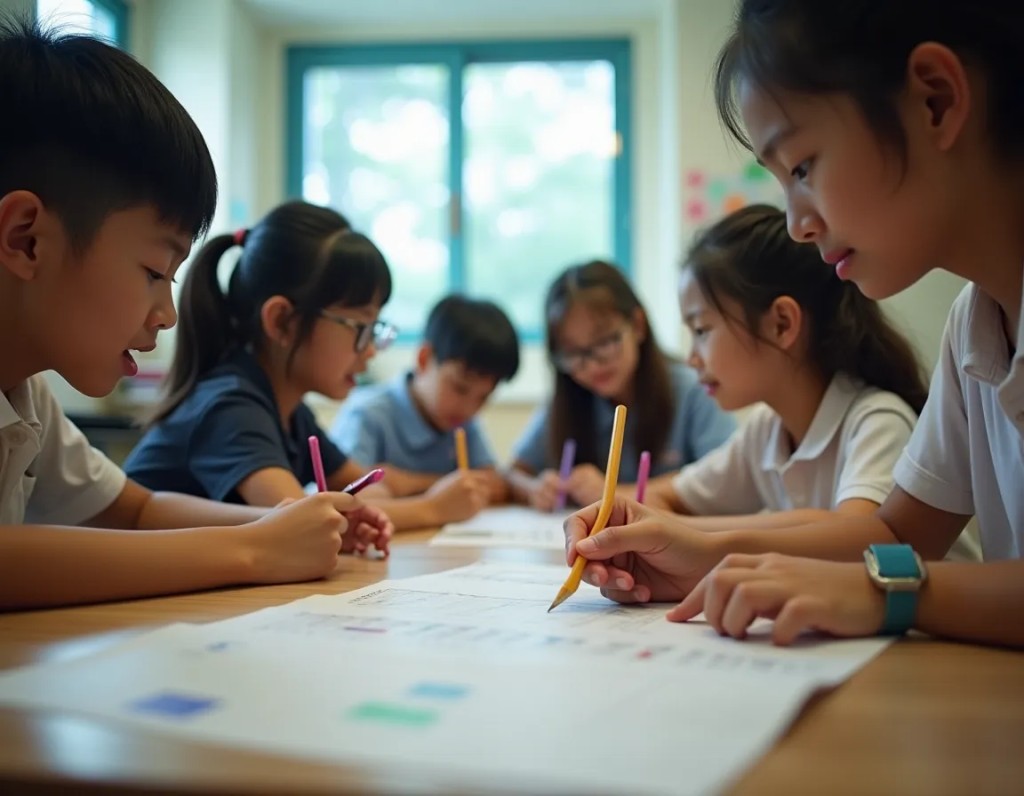
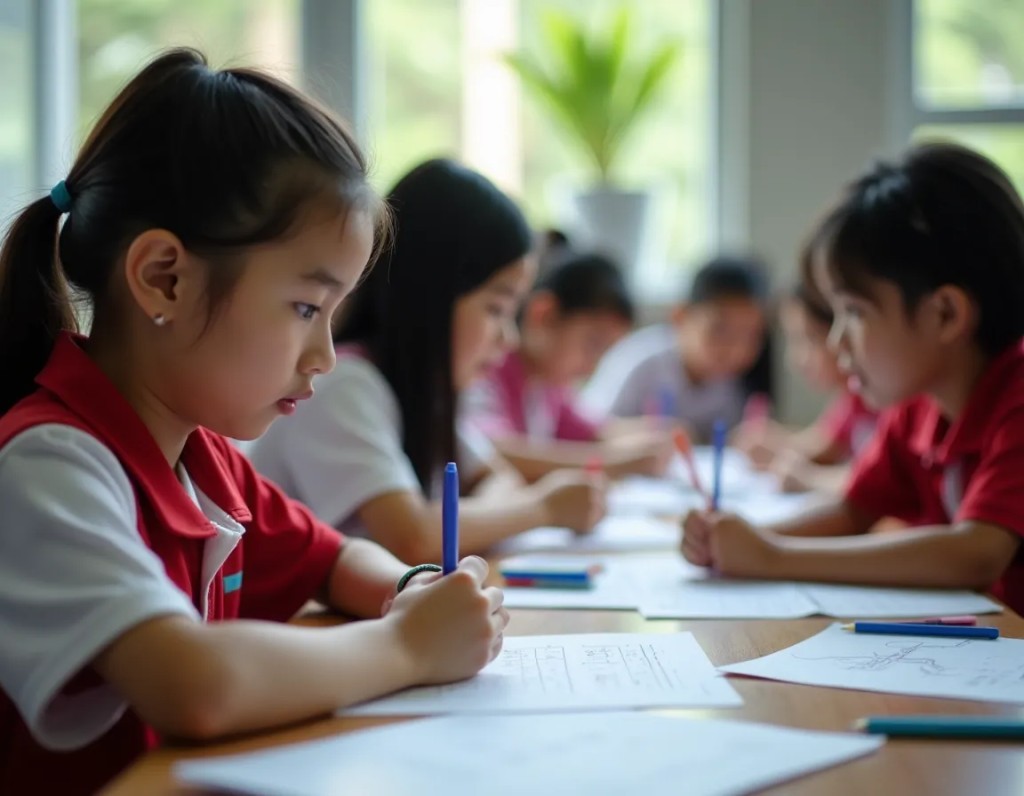
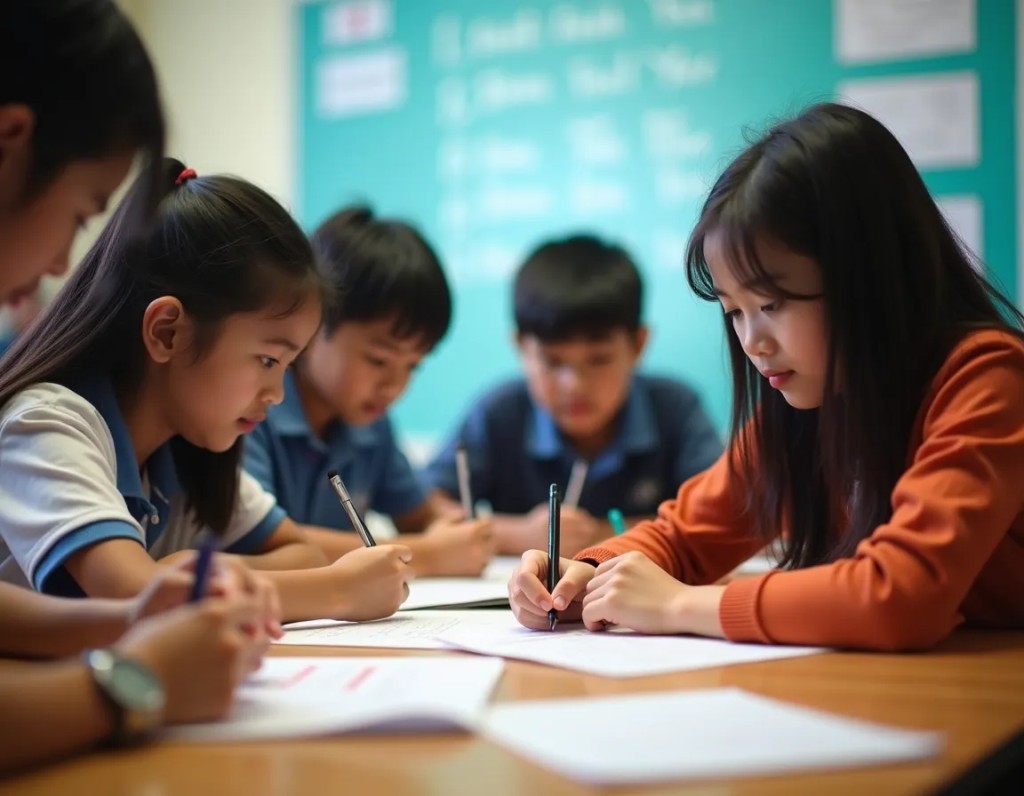
In a world that thrives on collaboration, why should math be any different? Imagine a group of students gathered around a table, animatedly discussing strategies to tackle a complex problem. This collaborative approach not only enhances their understanding but also builds essential communication skills. Through group activities, students learn to articulate their thought processes, consider diverse perspectives, and arrive at solutions collectively. This mirrors real-world scenarios where teamwork is often the key to success.

  • Studies indicate that students working in groups tend to retain information longer and develop better critical thinking skills.

Interactive Learning Techniques: Making Math Enjoyable

What if math could be as engaging as a thrilling game? Interactive learning techniques aim to do just that. By incorporating methods such as gamification, simulations, and hands-on activities, math becomes an enjoyable experience. These techniques demystify complex topics, ensuring students grasp foundational concepts effectively. Picture students participating in a math scavenger hunt, where each clue leads to the next problem, or using virtual reality to explore geometric shapes in a 3D environment. Such immersive experiences not only capture students' interest but also deepen their understanding.

  • Gamification in education has been shown to increase student motivation and engagement significantly.

The Role of Secondary 1 Math Tuition: Bridging the Gap

In Singapore's competitive academic landscape, Secondary 1 Math Tuition plays a pivotal role in supporting students. These supplementary classes, tailored to reinforce and extend the Ministry of Education (MOE) syllabus, provide a structured environment for students to build problem-solving skills. Experienced tutors guide students through foundational topics such as algebraic expressions, number patterns, and geometry, addressing any gaps from primary-level math. By offering personalized attention and engaging activities, tuition centers ensure that students are well-prepared for more advanced secondary topics.

  • According to a study by the National Institute of Education, students attending supplementary tuition classes often show improved academic performance.

Embracing the Future: A Call to Action

As we look to the future, the importance of problem-solving skills in math education cannot be overstated. In a world driven by innovation and technology, these skills are the key to unlocking endless possibilities. What if, by nurturing these abilities, we could empower a generation of thinkers, creators, and leaders? The journey begins with transforming math learning into an engaging and rewarding experience. Let us embrace this opportunity to inspire young minds, encouraging them to explore, question, and solve with confidence.

The journey to enhancing problem-solving skills in Secondary 1 Math is filled with potential. By integrating puzzles, collaborative tasks, interactive techniques, and supportive tuition, we can create a vibrant learning environment that prepares students for the challenges ahead. Together, let's embark on this adventure and watch as our young learners thrive.

Technology in Math Learning

Imagine a world where math isn't a daunting subject but a thrilling adventure for your child. Picture your child not just solving equations but exploring them with the same curiosity as a detective unraveling a mystery. This isn't a far-fetched dream. Thanks to the rapid integration of technology in education, this vision is becoming a reality for many parents in Singapore. By leveraging educational apps and tools, students can experience math lessons that are not only engaging but also motivating, making secondary 1 math tuition more effective and enjoyable.

Unlocking the Power of Technology in Math Education

In the bustling cityscape of Singapore, where academic excellence is highly prized, technology has emerged as a powerful ally for parents aiming to boost their children's performance in secondary 1 math. With the advent of interactive learning platforms, students can now dive into math concepts with the enthusiasm of a gamer tackling a new level. But how exactly does technology transform the learning experience?

Consider educational apps that turn abstract algebraic expressions into interactive puzzles. These apps provide immediate feedback, allowing students to learn from their mistakes in real-time. It's like having a personal tutor available 24/7, guiding them through the labyrinth of numbers and equations.

  • According to a study by the National University of Singapore, students using educational apps showed a 20% improvement in math scores.

Interactive Learning Techniques: The Game Changer

Interactive learning techniques are revolutionizing the way students perceive math. No longer confined to paper and pen, students now engage with math through dynamic animations, virtual manipulatives, and gamified challenges. This approach not only demystifies complex topics but also ensures students grasp foundational concepts effectively.

  • Virtual Manipulatives: These are digital objects that students can manipulate to understand mathematical concepts. For instance, virtual blocks can help students visualize and solve problems related to geometry and spatial reasoning.
  • Gamified Learning: By turning math problems into games, students become more motivated to solve them. This method taps into their competitive spirit and makes learning fun.
  • Adaptive Learning Platforms: These platforms assess a student's strengths and weaknesses and tailor lessons accordingly. It's like having a bespoke suit, but for education, ensuring every student gets the support they need.
  • Fun Fact: The first educational computer game, "The Oregon Trail," was created in 1971 and laid the groundwork for gamified learning.

The Role of Secondary 1 Math Tuition in Singapore

In Singapore, secondary 1 math tuition plays a crucial role in reinforcing what students learn in school. With the help of technology, these tuition classes are becoming more personalized and effective. Imagine a classroom where each student's learning journey is as unique as their fingerprint. Technology enables tutors to tailor their teaching methods to individual learning styles, ensuring that no student is left behind.

Moreover, technology fosters collaboration and communication among students. Online forums and discussion boards allow students to share insights and solve problems together, building a community of learners who support each other in their academic pursuits.

Overcoming Challenges with Technology

While technology offers numerous benefits, it's essential to navigate its challenges carefully. Parents must ensure that their children use educational tools responsibly, striking a balance between screen time and traditional study methods. It's like walking a tightrope, where the right balance can lead to a rewarding educational journey.

Additionally, the digital divide remains a concern. Not all students have equal access to technology, which can create disparities in learning opportunities. Addressing this issue requires collaboration between educators, parents, and policymakers to ensure that every child can benefit from the technological advancements in education.

  • According to UNESCO, around 1.3 billion students worldwide lack access to the internet, highlighting the importance of addressing the digital divide.

Looking Ahead: The Future of Math Education

As we look to the future, the integration of technology in math education promises even more exciting developments. Imagine augmented reality (AR) experiences that bring math concepts to life, or artificial intelligence (AI) tutors that provide personalized instruction. The possibilities are endless, and the potential for enhancing secondary 1 math tuition is immense.

So, what if we embraced these innovations wholeheartedly? What if we allowed technology to be the bridge that connects students to a deeper understanding and appreciation of math? The journey is just beginning, and with the right tools and mindset, our children can embark on a mathematical adventure that is both enlightening and empowering.

By embracing technology and interactive learning techniques, parents can transform secondary 1 math into an engaging and rewarding experience for their children. With the right approach, math can become a subject of curiosity and excitement, paving the way for academic success and a lifelong love of learning.

Addressing Primary-Secondary Transition Gaps

Imagine a bustling marketplace filled with vibrant stalls. Each stall represents a different subject your child will encounter as they transition from primary to secondary school. The math stall, with its intricate patterns and abstract concepts, is one of the most visited. However, navigating this stall requires guidance, especially as students step into Secondary 1—a pivotal year that sets the foundation for future academic success.

Understanding the Transition

In Singapore, the leap from primary to secondary school math can feel like moving from a tranquil countryside to a lively cityscape. The curriculum expands significantly, introducing topics like algebraic expressions and basic geometry. For many parents, the question looms: How can I ensure my child navigates this transition smoothly?

Secondary 1 Math Tuition: A Supportive Ally

Secondary 1 Math Tuition emerges as a crucial ally. These specialized tuition programs are tailored to reinforce the Ministry of Education (MOE) syllabus while addressing gaps from primary-level math. By offering structured courses that emphasize problem-solving and critical thinking, these programs help students build confidence and competence.

Common Pitfalls and How to Avoid Them

Despite the best intentions, students often encounter challenges. Here are some common pitfalls and strategies to overcome them:

  • Overwhelming Curriculum: The breadth of new topics can be daunting. Encouraging regular revision and using visual aids can help demystify complex concepts.
  • Lack of Engagement: Traditional lecture methods may not resonate with every learner. Interactive learning techniques, such as gamified quizzes and collaborative projects, make math enjoyable and engaging.
  • Foundation Gaps: Identifying and addressing primary-level gaps is crucial. Tailored tutoring sessions can provide focused attention to areas that need reinforcement.

Interactive Learning Techniques: Bringing Math to Life

Interactive learning methods transform how students perceive math. Picture a classroom where students use digital tools to visualize algebraic equations or participate in math-themed escape rooms. These techniques not only make learning fun but also enhance understanding by allowing students to see and manipulate mathematical concepts in real-time.

  • Research shows that students who engage in interactive learning are more likely to retain information and apply it effectively.

Bridging Activities: The Secret Sauce

Bridging activities act as the glue that holds the transition process together. These activities, often incorporated into Secondary 1 Math Tuition, focus on linking primary school concepts with secondary school challenges. For instance, using relatable real-world scenarios to explain ratios or measurements helps students see the practical application of math.

  • Studies have found that students who participate in bridging activities show increased confidence and adaptability in their new academic environment.

Real-World Connections

Imagine your child measuring ingredients for a cake or calculating the distance for a family road trip. By connecting math to everyday life, students understand its relevance and importance, making them more inclined to engage with the subject.

  • Incorporating real-world math problems can improve students' problem-solving skills and increase their interest in the subject.

Looking Ahead: The Future of Math Learning

The landscape of math education is ever-evolving. As technology advances, so do the methods of teaching and learning. What if, in the near future, virtual reality becomes a staple in classrooms, allowing students to explore mathematical landscapes? This intriguing possibility highlights the importance of adaptability and continuous learning.

  • Virtual reality in education is gaining traction, with studies indicating its potential to enhance spatial understanding and engagement among students.

For parents in Singapore, the journey through Secondary 1 math is not just about acing exams but fostering a love for learning that transcends the classroom. With the right support, resources, and mindset, this transition can be a stepping stone to a world of possibilities.

Customizing Learning for Different Proficiency Levels

Imagine walking into a bustling classroom where each student is on a unique mathematical journey. Some are just beginning to explore the wonders of algebra, while others are already adept at solving complex equations. How can a single teacher cater to such diverse learning needs? The answer lies in tiered lessons and personalized feedback, strategies that can transform the learning experience for Secondary 1 students in Singapore.

Bridging the Gap: The Role of Secondary 1 Math Tuition

In Singapore, Secondary 1 Math Tuition is more than just supplementary education; it's a lifeline for students transitioning from primary school. These tuition classes are meticulously designed to align with the Ministry of Education's syllabus, focusing on foundational topics like algebraic expressions, number patterns, and basic geometry. But why is this so crucial?

  • Singapore consistently ranks high in international math assessments, such as the Programme for International Student Assessment (PISA), showcasing the effectiveness of its educational strategies.

Consider the transition from primary to secondary school as a leap from a gentle stream to a flowing river. Students must navigate more challenging waters, and without the proper guidance, they might feel overwhelmed. Secondary 1 Math Tuition acts as a life raft, providing the support needed to stay afloat and thrive. By reinforcing primary concepts and introducing more advanced topics, these classes ensure students are well-prepared for the academic challenges ahead.

Interactive Learning Techniques: Making Math Engaging

Gone are the days when math was a solitary pursuit of numbers and formulas. Today's classrooms are vibrant ecosystems where interactive learning techniques play a pivotal role. From digital tools like math apps and online platforms to hands-on activities, these methods make learning math an engaging adventure.

Imagine a classroom where students use virtual reality to explore geometric shapes or collaborate in teams to solve real-world math problems. These interactive techniques demystify complex topics and ensure students grasp foundational concepts effectively. By making math enjoyable, students are more likely to develop a love for the subject, paving the way for academic success.

Personalized Feedback: A Key to Unlocking Potential

Every student is unique, and their learning needs vary significantly. Personalized feedback is akin to a personalized map, guiding each student through their educational journey. In the context of Secondary 1 Math Tuition, this means offering tailored advice and insights based on individual performance and understanding.

  • Research shows that personalized learning can increase student engagement and motivation, leading to better academic outcomes.

For instance, a student struggling with algebra might receive additional practice exercises, while another excelling in geometry could be challenged with advanced problems. This approach ensures that every student progresses at their own pace, fostering a sense of achievement and confidence.

Challenges and Innovations in Math Education

While the benefits of tiered lessons and personalized feedback are evident, implementing these strategies comes with its challenges. Teachers must balance the needs of diverse learners, often within limited timeframes. However, innovations in educational technology provide exciting solutions.

Adaptive learning platforms, for example, use artificial intelligence to tailor lessons in real-time, adjusting difficulty levels based on student responses. These innovations not only enhance the learning experience but also empower teachers to manage diverse classrooms more effectively.

Embracing the Future: A Call to Action

As we stand on the brink of educational transformation, the importance of customizing learning for different proficiency levels cannot be overstated. Parents, educators, and policymakers must work together to ensure that every student has access to the resources they need to succeed.

What if every classroom embraced these strategies? Imagine a world where every student, regardless of their starting point, could achieve their full potential. By investing in personalized education and interactive learning, we can make this vision a reality. Let's embark on this journey together, shaping a brighter future for our children, one math lesson at a time.

Encouraging Curiosity and Inquiry

Imagine a young explorer, perched on the edge of a vast, uncharted map. This is what learning math can feel like for a Secondary 1 student in Singapore. The terrain is new, the challenges are many, but the journey holds the promise of discovery. As parents, you have the power to equip your child with the tools they need to navigate this landscape, fostering an environment where curiosity and inquiry are not just encouraged but celebrated.

Nurturing a Math-Positive Environment

Creating a math-positive environment begins at home. Think of it as setting the stage for a grand performance where your child is the star, and math is the script that guides them. Encourage questions, no matter how simple or complex they may seem. When your child asks, "Why do numbers behave this way?" or "What happens if I change this variable?" they are not just seeking answers; they are building a relationship with math that is based on curiosity.

  • Fun Fact: Did you know that asking questions is a sign of intelligence? Studies show that curious students often perform better academically.

Research shows that students who view math as a subject that rewards inquiry tend to perform better. This mindset shift transforms math from a subject of rote memorization into a field ripe for exploration. Consider integrating everyday math discussions into your routine. Discuss the math behind daily activities, like grocery shopping or cooking, to illustrate practical applications.

Interactive Learning Techniques

Interactive learning techniques are like the secret ingredients in a master chef's recipe, making math engaging and enjoyable. These methods help demystify complex topics, ensuring students grasp foundational concepts effectively. One popular technique is using math games and puzzles, which turn abstract concepts into tangible challenges. Picture a puzzle where every piece fits perfectly into the larger picture of understanding algebra or geometry.

  • Fact: Games like Sudoku and chess are known to enhance problem-solving skills and logical thinking.

Technology also plays a pivotal role in interactive learning. Tools like educational apps and online platforms provide a dynamic way to learn. These resources often include interactive simulations that allow students to manipulate variables and see real-time effects, making abstract ideas more concrete.

The Role of Secondary 1 Math Tuition

In Singapore, Secondary 1 Math Tuition acts as a compass, guiding students through the uncharted waters of secondary school math. These supplementary classes reinforce and extend the Ministry of Education's syllabus, offering tailored programs that address individual learning gaps. Imagine a seasoned guide who knows the terrain well, pointing out hidden paths and shortcuts that make the journey smoother.

Tuition centers often employ engaging activities and structured courses to build problem-solving skills. They cater to different proficiency levels, ensuring that each student feels challenged yet supported. This personalized approach helps students transition seamlessly from primary-level math to more advanced secondary topics.

Building a Foundation for Future Success

Think of Secondary 1 math as the foundation of a skyscraper. A strong base ensures the structure can rise to great heights, withstand challenges, and remain resilient. By fostering curiosity and inquiry, you are helping your child lay a robust foundation for future academic success.

Encourage your child to view math as more than just numbers and formulas. It's a language that describes the world around them, from the symmetry of a butterfly's wings to the patterns in a musical composition. By making these connections, students develop a deeper appreciation for math's role in everyday life.

Embracing Challenges and Celebrating Growth

Every journey has its hurdles, but it's how we approach them that defines our experience. Encourage your child to embrace challenges as opportunities for growth. When they encounter a difficult problem, suggest they view it as a puzzle waiting to be solved. This mindset not only builds resilience but also instills a sense of achievement with each success.

Celebrate the small victories along the way. Whether it's mastering a new concept or improving a test score, each step forward is a testament to your child's hard work and determination. By acknowledging these achievements, you reinforce a positive attitude towards learning.

Looking to the Future: The Endless Possibilities of Math

As your child continues their mathematical journey, remind them of the endless possibilities that lie ahead. What if math could unlock doors to careers in engineering, architecture, or even art? The skills they develop now are the building blocks for future innovations and discoveries.

  • Fun Fact: Some of the world's greatest inventions, like the computer and the internet, were made possible through mathematical principles.

Fostering curiosity and inquiry in Secondary 1 math is about more than just academic success. It's about nurturing a lifelong love for learning, encouraging exploration, and unlocking potential. As parents, your role is to light the path, providing the support and encouragement your child needs to thrive. Together, you can transform the journey of learning math into an exciting adventure.

Frequently Asked Questions

Common challenges include understanding new concepts like algebra, adapting to a faster pace of learning, and applying math in problem-solving scenarios.
Encourage regular practice, provide access to quality learning resources, and consider engaging a tutor for personalized guidance.
Regular practice helps reinforce concepts, improve problem-solving skills, and builds confidence in tackling math exams.
Teach time management, familiarize them with exam formats, and practice past exam papers to identify and focus on weak areas.